[ RESTAURANT OPERATING SYSTEM ]LIVE
Prime POS
An AI-native point of sale where the restaurant is run from intent, not menus. Roughly 60 collaborating agents cover menu, inventory, purchasing, customer management and floor operations as one system — the operator states what they want and the change propagates across every station.
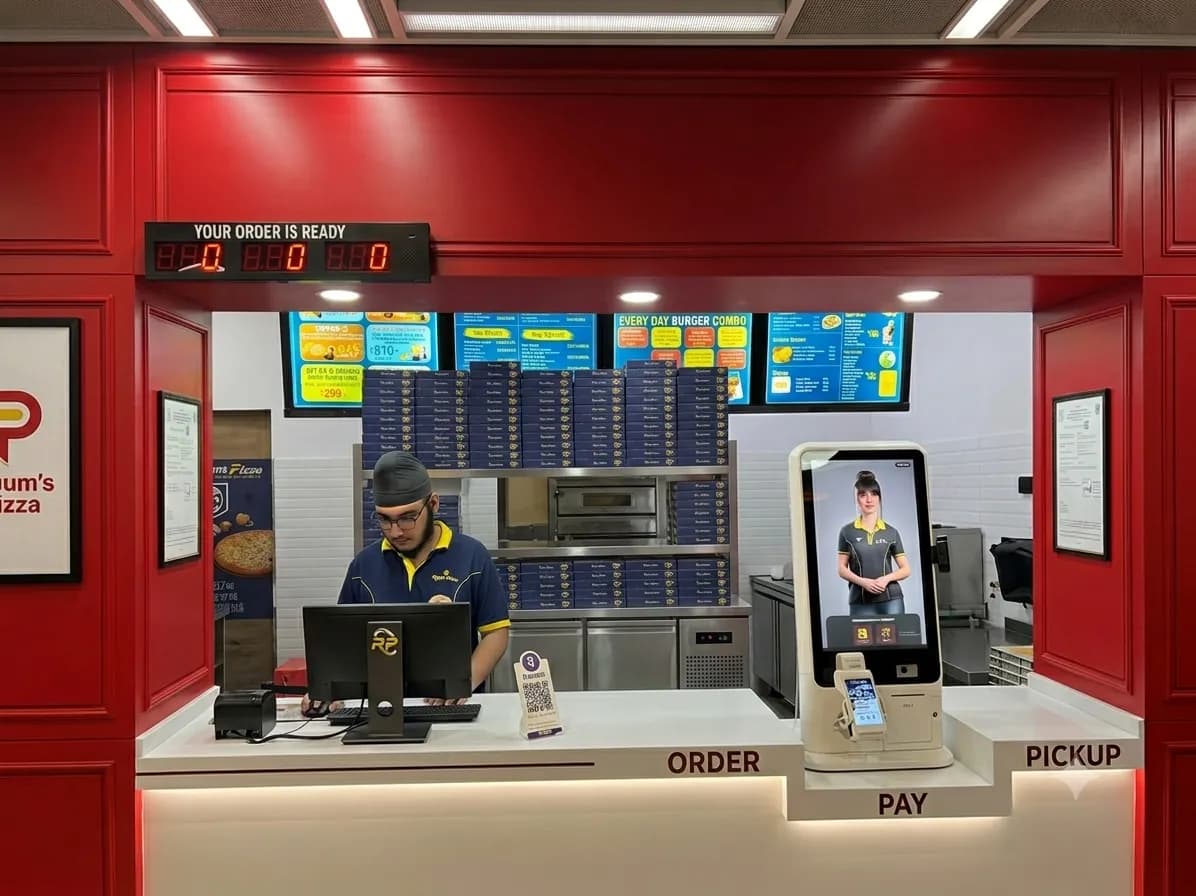
// Problem
The Problem
A restaurant runs on four systems that do not speak: the POS, the kitchen display, the inventory sheet, and three delivery-platform tablets. When the kitchen 86s a dish, someone has to remember to pull it from the POS, the aggregators and the printed specials — and usually doesn't. Margin leaks in the gaps: stock counted weekly, reorder by instinct, menu pricing set once and left, and no view of which items actually make money once wastage is counted.
- A single operational change requires the same edit in four places; one gets missed every service.
- Inventory is reconciled after the fact, so shortages are discovered at the pass, not at the order.
- Purchasing runs on habit rather than consumption, tying up cash in the wrong stock.
- Item-level profitability after wastage is effectively invisible to the operator.
// Overview
Prime POS collapses the restaurant stack into one agent-operated system. An operator's stated intent is decomposed and executed across menu, inventory, purchasing, pricing, CRM and the floor simultaneously — a single instruction reaches every surface that needs it, including connected delivery channels. Consumption is deducted against recipe-level bills of material in real time, which makes stock position live rather than weekly and lets reorder agents act on actual depletion curves. Customer history feeds targeting, and item-level margin is computed net of measured wastage rather than theoretical yield.
// AI System
Why AI
The value is not natural language for its own sake — it is that one intent has many correct consequences and a human will not execute all of them mid-service. That requires a system that can infer the full blast radius of an instruction and act across it. Language is simply the fastest input device for an operator holding a tray. Beneath it, the agents are doing conventional but coordinated work: recipe-level deduction, depletion forecasting, channel synchronisation.
| Group | Count | Does |
|---|---|---|
| Menu & pricing | ~12 | Item availability, channel sync, price and margin management |
| Inventory | ~14 | Recipe-level depletion, live stock position, wastage capture |
| Purchasing | ~10 | Consumption forecasting, reorder point, supplier order drafting |
| Customer | ~12 | Order history, segmentation, targeted offers, feedback triage |
| Floor & fulfilment | ~12 | Order routing, KDS coordination, delivery-channel state |
// Specs
Specifications
- INTERFACE
- Prompt-driven; full touch POS retained
- ORCHESTRATION
- ~60 collaborating agents
- INVENTORY
- Recipe-level BOM deduction, real time
- CHANNELS
- In-house + connected delivery platforms, synchronised
- MARGIN
- Item-level, net of measured wastage
// Features
Features
- 01One stated intent propagates across menu, POS, kitchen display and delivery channels simultaneously.
- 02Stock depletes against recipe-level bills of material as orders fire, not on a weekly count.
- 03Reorder proposals generated from actual consumption curves and lead times, drafted for approval.
- 04Customer segmentation and targeted offers built from order history without a separate CRM.
- 05Item-level profitability computed net of captured wastage, surfaced per service.
- 06Full touch POS retained underneath — the prompt layer is additive, staff are not retrained.
// Architecture
Architecture
OPERATIONS FLOW
Runtime · one item, left to right
- 01Operator Intent
- 02Intent + Scope Resolution
- 03Blast-Radius PlannerMenu & PricingInventoryPurchasingCustomerFulfilment
- 04State Reconciliation
- 05Floor / Kitchen / Channels
dashed = the inference step, where the system exercises judgment
System stack
Data in · decisions out
01
Sources
The four systems that never spoke
02
Ingestion
One event log
03
Ontology
Restaurant state as objects
04AI
Intelligence
Predict and propagate
05Human
Human control
The manager runs the floor
06
Actions
Written back
Observability
Every model call traced; evals run on real cases, not anecdotes.
Governance
Entitlements enforced at retrieval; rules versioned by the organisation.
Write-back
Systems of record are written only through the approval gate.
Every propagation is reversible; state reconciliation resolves conflicts between channels before commit.
// Impact
Impact
- ~60
- Agents in productionverified
- One
- Systems of record, previously fourdesign intent
Interested in Prime POS?
Let's discuss running your floor from intent.
Get in touch